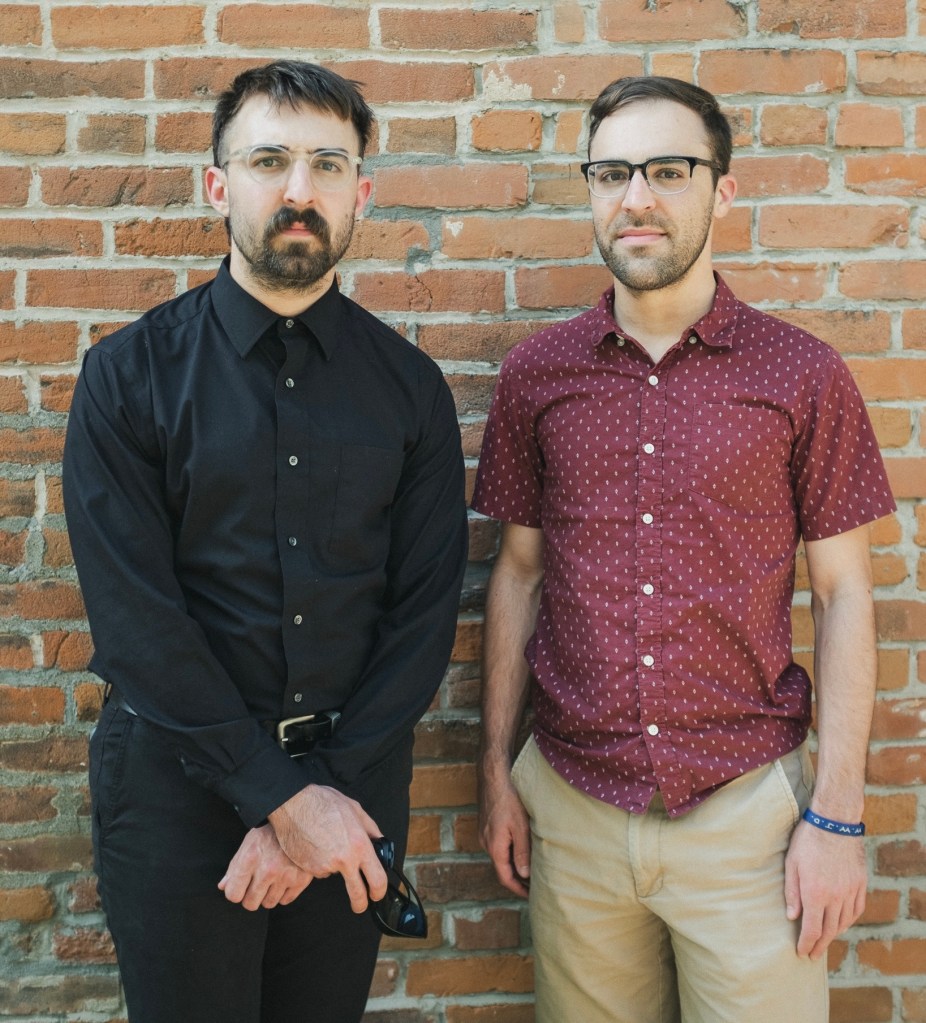
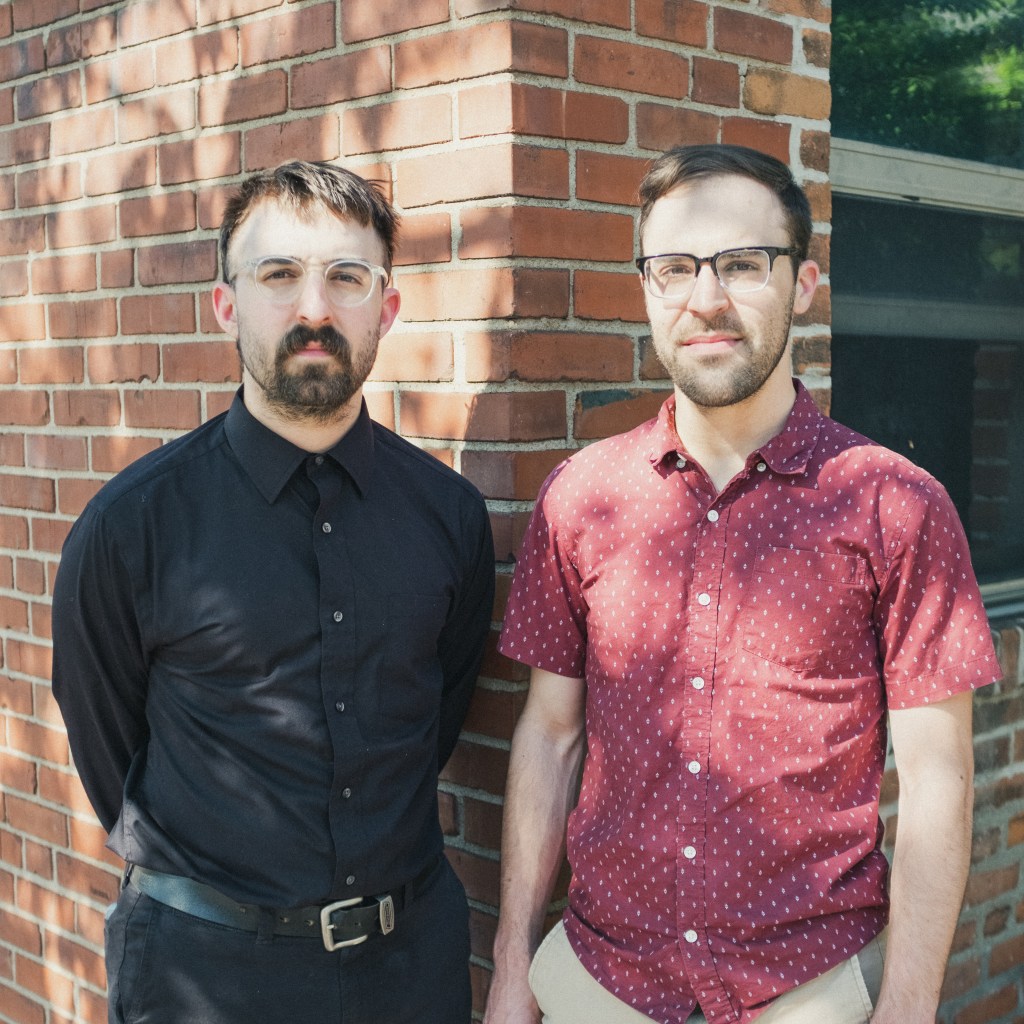
Carlo dell’Aquila is the genre-defying project of multi-instrumentalists Dylan C. Beck (A Real Echoey Approach, Heidi Klum’s Bangs) and Danilo Uomo. Blending shimmering dream pop with searing noise rock, the band’s sophomore long-play record So Common is anything but ordinary. Earlier this month, I discussed with the duo the making of the record and the three years’ worth of events that inspired it.
Rex Talyetiwhoop: Welcome back. Great to chat with you both again.
Dylan C. Beck: Definitely. And thank you so much for getting in touch about the record. We are very excited to share the music and to reminisce about the process.
RT: Well, I’ve been looking forward to digging into the backstory. Back in October 2020, Carlo dell’Aquila released its debut album Laura. On Spotify, the record is billed as a “ten-song cycle [that] enfolds the listener in a swirling fever dream of existential poetic and sonic motifs,” but it’s essentially a tribute to the character Laura Palmer from the David Lynch and Mark Frost television series Twin Peaks. Going into the process of writing and recording this new record here, did you have any aspirations for a sequel?
DCB: Oh, not at all. I am very pleased with what we were able to do there, and I feel like the structure and sequencing of the record allows it to stand on its own as a complete work. Back when I started writing So Common, I had some pretty wacky ideas for the concept and lyrics — lots of religious and mythological imagery — but that never came to fruition because that is simply not something with which I am very familiar. Briefly, I had considered putting in a concerted research effort, but that felt disingenuous.
RT: Certainly, though, your newer material is not without callbacks to Laura. On your December 2020 cover of Sufjan Stevens’s “Star of Wonder,” the ending lyrics from “Out of Darkness, Let Us Sprawl” are repeated in refrain. What would you describe to listeners as the through-line between this album and your debut?
DCB: Generally, I would argue that the themes of devastation and loss on our first record have been carried forward to some extent throughout our entire discography to date. Of course, there are explicit references to persons, places, and events that occurred in Twin Peaks on Laura, but we sought to abstract the emotional content from the literal imagery of the show. Like, I would assert that many of the lyrical allusions to the television series were merely included to suggest character or to evoke atmosphere or feeling. Even more, I would argue that I would never write from a perspective that did not align with my own experience in a significant or meaningful way. So, in spite of the fact that the lyrical framework of Laura is heavily influenced by and draws directly from the events of some preexisting body of work, I perceive the narrative of the record as reflective of my own experience. Basically, feeling is believing, right?
RT: Even still, your new record retains the evocative edge of its predecessor. One of the most immediately striking aspects of the latest material is the overtly political nature of several tracks. How do you expect casual listeners of your music to react?
DCB: (exhales sharply) Oof. (pauses) I have an extraordinary amount of trepidation at my potential for embarrassment ahead of the release of the record for this exact reason. I can’t say it was ever really my intention to make a political record, but as I listened back to the demos in 2021 and 2022 — especially around the time of the January 6 Riots and the absurd Supreme Court decisions last June — I felt utter disgust and contempt for these failed bureaucratic institutions and ridiculous traditions. Last year on the Fourth of July, I wrote the lyrics to one of the songs as people in my neighborhood lit off fireworks late into the night. I would jokingly call it a “diss track,” but at the same time, it’s a pretty sincere expression of my exhaustion and frustration with the usual pomp-and-circumstance of American exceptionalism. Even though I feel a marked discomfort at the thought of carrying this torch because I have never experienced systemic marginalization or oppression — and I harbor a permanent fear that my actions might come across as contrived or insincere — I would argue that my lyrical approach is more diaristic than didactic. But I could see how listeners might perceive a line about “greed, oppression, and misogyny” as preachy. But again, the record as a whole is representative of my own experience, and to a large extent, the tumultuous political Hellscape of the last seven years has come to bear tremendously on that. We can all identify with the chaos and terror that birthed a lot of the material on this record.
RT: Certainly, chaos and terror are familiar themes from the greater lyrical narrative that weaves across your collective catalogs — most notably in Dylan’s solo project A Real Echoey Approach — but I’d argue that the existential dread here is more sonically palpable than ever before. I was exhilarated by the broad palette of tones incorporated in the music on this record — from scorching guitar feedback to lush horns and ethereal synthesizers. Could you share a bit about your influences and inspiration?
DCB: Gladly. I’d point out first and foremost that the record materialized over the course of nearly three years — and part of that time was spent during the heightened anxiety and uncertainty of the quarantine era of the pandemic — so some of the tracks have had legs, so to speak. But I was just very excited to begin writing new material as the production of [the debut Carlo dell’Aquila record] Laura began to come to a close in the Fall 2020. I had even recorded the most nascent version of the album in its entirety by the end of December 2020, but most of the tracks were absolutely sprawling in terms of their run time: the record was at one point roughly 72 minutes long [for an average track length of nine minutes]. I have texts to Danilo from November 2020 in which I shared a playlist for him to peruse, and I flaunted a release date of 2 June 2022 for So Common, but we didn’t actually begin collaborating until December 2021. Between the time I started working on the record [in August 2020] and then, for example, I had reworked the fourth track from a pretty blatant ripoff of [Phil Elverum’s] “The Glow” to an offering that I find aligns more closely with our sound. Likewise, the first part of the fifth track was originally completely different from what you hear on the finished product. (laughs) Like, the earliest demo of that song was pretty gnarly: the first half of the track featured this chuggy, atonal guitar riff that I dreamed up in this bizarre tuning featured on the first track; the phrasing was absolutely mental — sixteen beats spread over bars with two, three, four, and seven beats; and the drums played this preposterous blast beat groove on the snare. I mean, it was just nasty. (laughs) But then again, I don’t know; I’ll admit that I’ve had some aspirations recently of refining that one for a future release. We’ll see. But I’d say that demo is pretty exemplary of the sound that inspired the record on the whole: where Laura aspired to the greats the likes of the Antlers, Sufjan Stevens, and Talk Talk, I was firmly under the influence of Hammock, Mount Eerie, and This Will Destroy You during the making of So Common.
RT: Do you feel any apprehension that the evolution of your sonic approach could turn off listeners who were initially brought on board with Laura?
DCB: I imagine that on first listen, many will be surprised by the striking differences between this album and our debut, but I would argue that there are still plenty of continued musical and lyrical motifs. Like, the piano progression that opens the record bears a striking resemblance to “Laura Palmer’s Theme” by Angelo Badalamenti, so even a thread as subtle as that is carried forward. Of course, there is also the seventh track [which is billed as the second part of a song from the band’s debut album]. But in regard to the compositional and textural aspects of the music itself, I would argue that it’s a natural progression of the sound we established with Laura: we are still coming to the table with these familiar elements of indie folk and dream pop, such as the wistful pianos on the third track, the warm [Wurlitzer] organ on the fourth and sixth tracks, and the fingerpicked acoustic guitars and splendid horns on the fifth track; it’s just that this time, we have folded in some crunchier features like the corrosive bite of electric guitars on the first and fifth tracks or the canyons of static that crop up throughout the track list. Even still, I would argue that these are strands we have been pulling on as early as “Ghostly Visions / Searing Flames” or our cover of [Sufjan Steven’s] “Star of Wonder,” and I find that we pull off these styles pretty authentically.
RT: I find it interesting that you cite Mount Eerie as a reference point for this record because you also mention the “cosmic mysticism of the Microphones” in your common biography across your social media profiles. Both are the monikers of singer-songwriter Phil Elverum, whom you mentioned earlier. Listening to the record, I couldn’t help but notice and enjoy other Easter eggs of this nature — both in the form of textual nods to the canon as well as sonic allusions to your material and that of others.
DCB: Right — and this is something that we have discussed before in the context of my solo work as A Real Echoey Approach. Overall, my aim is to craft a cohesive and original sonic universe through my body of work. I will readily admit that Sufjan Stevens is undoubtedly my biggest influence and a hero of mine. I have links to his music on my personal website and everything. (laughs) I mention this because Sufjan is the most immediate point of reference that I have to what I am trying to achieve. Like, the way “Vesuvius” [from Stevens’s 2010 long-play record The Age of Adz] resurfaces in [his 2020 single] “My Rajneesh” is truly mesmerizing and inspirational. I could go on for ages about this because Sufjan maintains such a remarkable catalog, and his use of callbacks to his own material really serves to deepen his mythology and intrigue. But yeah, I would venture so far as to say that this is my most referential and reflexive work to date. Of the eight tracks, five borrow their titles from existing pieces, and two are explicitly intended as continuations of other songs, so those elements are quite overt. On the other hand, there are of course instances in which a phrase or a bit of imagery are unconsciously incorporated in the lyrics. (laughing) One thing I enjoyed during the quarantine era of the pandemic was finally sitting down and reading aloud to my partner at the time the entire Harry Potter series. I don’t know if you’ve read it or watched the films — and I don’t mean to be one of those stans who’s like, “Oh, man. You have to read the books, man!” — but some of the scenes simply cannot be replicated cinematographically. Besides, I realized that having only seen the movies, I missed some of the more salient quotes from the literature. On the fourth track of the record, in particular, I borrowed imagery from J.K. Rowling because her portrayal of death in the wizarding world was so striking to me: it’s described poignantly as this slipping away or gradual obscuring of a person behind this monolithic structure draped in cloth.
RT: I noticed that the theme of death is prevalent across the record — and in fact, it’s been pervasive in Dylan’s recent tracks “The Escape” and “Dream Song (2023)” as A Real Echoey Approach as well as the title track and lead single “So Common.” Do you feel comfortable to indulge the audience on that subject? Explicitly, I wondered if there were some life-altering event(s) that might have brought about this recent fascination.
DCB: Oh, that’s a really good question. (pauses) I would love to share about that. I’m not sure if there is really a clean or concise way to describe the feeling, but I would say that it’s a culmination of a lot things happening in gradual succession. Like we’ve mentioned, the record was conceived during a global pandemic, so there was obviously a compulsory recognition of and grappling with my own mortality during that time. I have struggled with asthma since I was a kid, so it was truly terrifying to deal with the outbreak of a severe respiratory disease on that scale. I felt so unsafe and insecure for so long. But aside from the very literal interpretation of lyrics such as “I choked on dead air” or “I faced death” in that context, I would argue that many of the lyrics and references to death are intended metaphorically. Recently, I saw through a very intentional and calculated split from my long-term partner; I moved into a studio apartment by myself; I graduated from the University of Kansas; I began a career as a mathematics professor; and I navigated my first Saturn Return — all of this in the time since the release of Laura. Bearing these events in mind, I feel closer to death than ever before. Like, I am at a point in my life at which I have completed — or have otherwise terminated — many of the long-term engagements in which I found myself. I don’t mean to be super bleak or anything, but I do feel a certain newfound comfort in death because I’ve accomplished so much that I wanted to do in life. Overall, I think my feelings toward death are most accurately reflected in the fifth track: one day, I will no longer exist, but until then, I have plenty of aspirations and reasons to live.
RT: Certainly, the record is not devoid of hope alongside the grief: I found the middle run from the third to the sixth tracks especially enlightening — and I mean that in the literal sense that I felt lighter after listening. I’d point out, too, that in spite of the gruesome imagery in the front half of the title track, therein lie some of the most uplifting words in your lyrical catalog, Dylan: “Lean into this, and dissolve in bliss.” Could you speak to the significance of “So Common” and its role as lead single?
DCB: Oh, that is delightful for you say! (laughs) But yeah, definitely. Even though the record is not at all times a paragon of optimism, I do wish for the listener to take from it a greater sense of levity and wholeness. Like, integration of the darkness and sadness we all experience is necessary to lead a fulfilling and meaningful life. Our intention with the sequencing of the record is to reflect the cyclical nature of our collective emotional narrative: we face a hopelessness, tragedy, or trauma; we engage in tactics to repair and strengthen; we propel ourselves into a space of acceptance and cautious optimism. But the cycle repeats. I suppose that with “So Common” and its chronology, we’re buying into the premise that first impressions are enduring. Or at the very least, we’re hoping that if someone who listens to the single “So Common” were to never hear the record So Common, then that person would be left with a message of uplift and possibility characteristic of the album on the whole.
RT: Listeners of both A Real Echoey Approach and Carlo dell’Aquila will notice the interpolation of “So Common” around the nine-minute mark of the recent rework of “Dream Song.” Based on the timing of the album rollout, it seems that this was a conscious and intentional inclusion. What’s the connection there?
DCB: (laughs) Right, it was definitely purposeful. Coming up to the release of “Dream Song (2023),” I was actually not sure whether to put that track out under the moniker of A Real Echoey Approach or Carlo dell’Aquila or to attribute it as a collaborative effort between the two. Lyrically and sonically, it’s representative of both projects, and I would say that at this point in the chronology of my art, the narratives of the two bands are beginning to converge. Earlier this year, I experienced my third and final Saturn Return for the next thirty-odd years, and I was completely alone; it was one of the darkest moments of my life. But reflecting on that in the following weeks — and with this unfolding at the same time that I was working to remaster [the 2019 extended play record] It’s Hard to Remember That Our Lives Are Such a Short Time. It’s Hard to Remember That Our Lives Are Such a Long Time. [by A Real Echoey Approach] — I felt compelled to update “Dream Song” to reflect my present circumstances. Like, I view the track itself as a sort of “State of the Union” of myself. Back in the time when that record was originally released, I used to have these pretty vivid and beautiful dreams about my life and everything I believed it could be, but as you can glean from the rest of the track, I used that as a sort of escape from the existential dread of my day-to-day. Contrast this with the present version in which the dream state is this oppressive and nightmarish battleground. But yeah, to be totally blunt about my intentions, I would suggest that “Dream Song (2023)” is the confrontation with these intense feelings of grief and loss as a result of complex trauma I suffered as a child and “So Common” is the reflection — the resolution, the aftermath, the warm glow of the morning — and the natural progression away from that place of debilitation and toward healing and reconciliation.
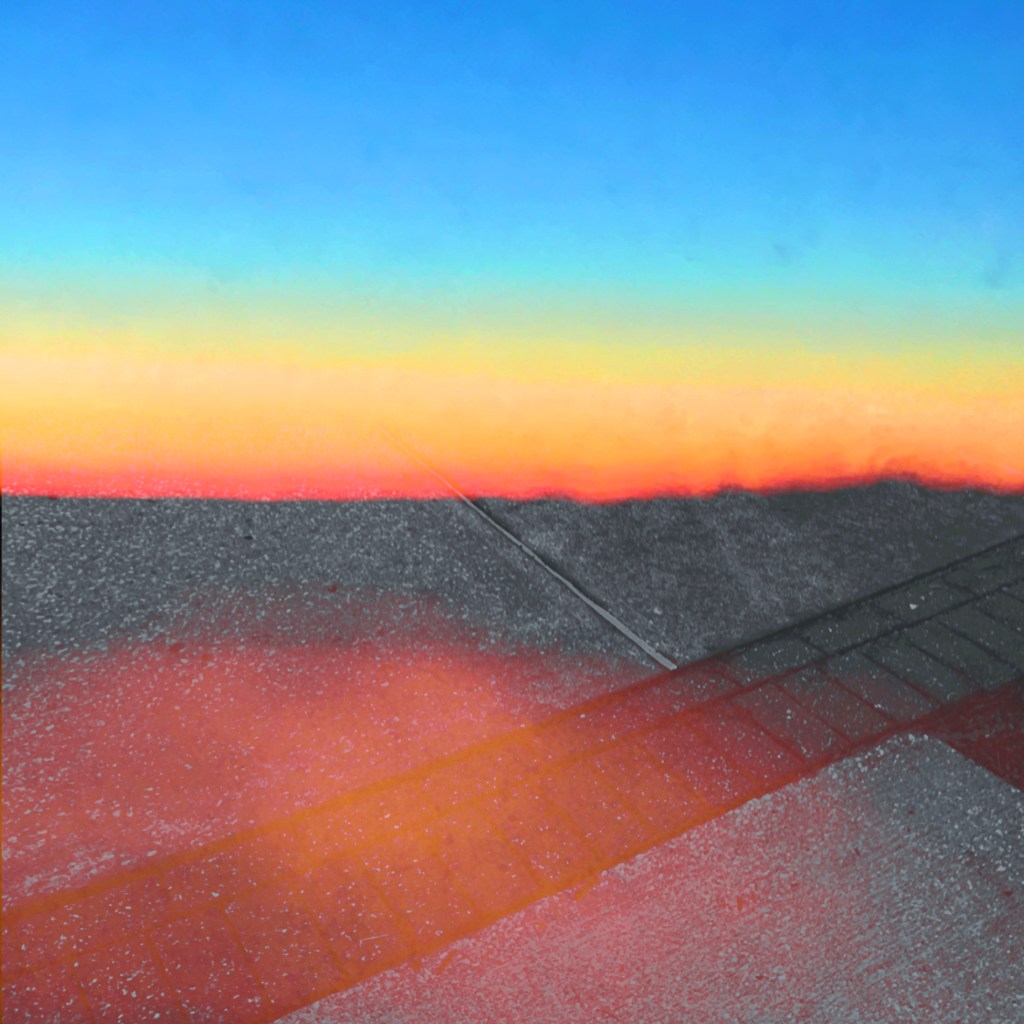
So Common is set for release on Saturday, 29 July 2023, as a name-your-price download at carlodellaquila.bandcamp.com and streaming on Spotify, Apple Music, Tidal, and more. Until then, access the band’s LinkTree to enjoy the title track and lead single “So Common” or revisit the duo’s debut record Laura wherever you stream.
Band photography provided above is courtesy of Justin Kingery.

