Under the moniker A Real Echoey Approach, multi-instrumentalist Dylan Beck (Heidi Klum’s Bangs, Carlo dell’Aquila) has crafted a sonic universe all its own. Last week, I caught up with him to chat about his efforts to remaster his early work, the history of his solo project, and his upcoming extended play record Until the Day I Am Lifted to the Sky, I Will Feel Your Voice Echo Within Me, and I Will Know I Am Not Alone.
Rex Talyetiwhoop: Good to see you again. We haven’t chatted extensively since I interviewed you and your brother Zach as Heidi Klum’s Bangs for the release of Evvy.
Dylan Beck: Back in 2019, yeah, before things got crazy. Well, thanks for doing this. I appreciate you listening and reaching out. It’s always a lot of fun.
RT: It’s my pleasure. We both know that I’m a huge fan of Heidi Klum’s Bangs, so I was very excited to see on the HKB Instagram that you two are planning to reissue your early releases in remastered high-quality audio. What’s that process been like?
DB: Oh, yeah, that’s been something that I’ve wanted to do for quite some time, but I haven’t really had the know-how or the motivation to seriously sink my teeth into it. But I’m very excited to continue working on all of that as time allows. I find that it’s actually kind of addictive — partially because it’s low-hanging fruit in the sense that all of the music is already composed and recorded, so it can be gratifying without consuming a ton of mental space — but it can start to grow very taxing as the record comes closer to the final version just because those micro-adjustments are the most difficult to get right. One thing to bear in mind is that we recorded almost all of our material as Heidi Klum’s Bangs on our own with a single Shure SM58 microphone, so there is really only so much we can do in the production stage to achieve the sound that I envision in my head. But I know we’re doing our absolute best work with these remasters, and that’s really reflected and consummated in the new versions.
RT: Considering all of the sonic details and textures that go into your records, I can imagine that’s the case. Already, you’ve remastered Thirteen, Silent, Sweet, and See-Through and Coming to Soon, Pt. 2 from Heidi Klum’s Bangs as well as your first two extended play records as A Real Echoey Approach. What might we expect next?
DB: I’m pretty eager to get high-quality versions of the Heidi Klum’s Bangs material uploaded to major streaming platforms simply because it is truly some of my favorite music to listen to recreationally, but many of our early stems were lost in a hard drive crash, so that’s presented a problem. Of course, there’s also the issue of giving each release an appropriate treatment to ensure that it sounds its absolute best, but we’re working on it. If we’re lucky, we might have one more in us this year.
RT: I’ll keep my fingers crossed. Now, I want to talk about A Real Echoey Approach. Over the last four years, you’ve released nine — is it right to call them extended play? — records under this moniker. On BandCamp, your mission statement is to “conjure inexplicable beauty in fragments of noise,” but your sound has really come to be informed by shoegaze and indie rock. Did you envision this trajectory when you started?
DB: Well, my first release as A Real Echoey Approach was a short soundtrack to a video game that doesn’t exist and likely never will. But it was fun to just put some sounds together in a low-stakes way without overthinking it or trying too hard. I plan to do a follow-up to that soundtrack — I have most of the songs written — but it’s not a priority. I created A Real Echoey Approach as a sort of catch-all side project through which I could distribute my various musical musings and endeavors, but yeah, it evolved quite quickly and naturally into this very important thing with a well-defined sound. Like I’ve mentioned to you before, I purchased my first electric guitar — a seafoam green Fender Duo-Sonic HS — in the summer of 2017 when I had a little extra dough kicking around from my salary as a graduate teaching assistant in mathematics at [the University of Kansas]. Before then, I had fantasized about writing an album in the vein of [the critically-acclaimed shoegaze quartet] My Bloody Valentine, so I had already come up with maybe the first [A Real Echoey Approach] EP. I bought the guitar with that in mind specifically. Gradually, I accumulated more gear — a Digitech RP3 effects pedal lent to me by my oldest brother Justin, a Fender Frontman 15G practice amp I found in the Lawrence Antique Mall for maybe $30, and a sonic white Fender Mustang PJ bass guitar — and that was enough to make a record. Unfortunately, on my first day living in Lawrence, I made the mistake of playing my drums full-volume in my apartment and was served an eviction notice. But I worked it out with my landlord so that I could stay; I just had to move my drums to Springfield with Zach and our friend Dalton. So, I had to program all of the beats on the original versions in Fruity Loops Studio.
RT: Wow, that sounds very serendipitous — not to diminish your eviction scare. With your shoegaze releases, you’ve really crafted a universe — both sonically and lyrically — in which these records exist and interact with one another in a really interesting way. Tell me a bit about your approach — pun intended.
DB: (laughs) Basically, all of the songs originate from my guitar noodling. Usually, that amounts to me trying familiar chord shapes up and down the fretboard in a really naïve way. I also play a lot of barre chords, but I drop the finger fretting all six strings because it’s too much work and hurts my hands. Using a capo is another trick that allows me to exploit this process even further. Only recently have I attempted to write a few songs using different tunings — an approach that Kevin Shields and Bilinda Butcher [of My Bloody Valentine] used extensively and to great success — and it’s been a real game-changer, but I haven’t yet mastered it. Once the guitar parts are written, I begin the search for the right sonic textures — how much and what kind of distortion, reverb, phaser, flanger, etc. — and that’s always the most time-consuming and difficult stage of songwriting. Like I mentioned earlier, I’ve used a Digitech RP3 pedal for most of my guitar releases just because it’s super versatile and programmable, but my friend Jordan graciously allowed me to use his [Electro-Harmonix] Big Muff Pi [distortion pedal] and Fender Hot Rod Deluxe II [guitar amplifier] back in 2019, and that has kick-started an insatiable drive for gear. It’s become an obsession. Last year, I invested in an Op-Amp Big Muff Pi [fuzz pedal] because I read that [Smashing Pumpkins’ frontman] Billy Corgan used one on [Smashing Pumpkins’ critically-acclaimed sophomore album] Siamese Dream, so that’s what’s been featured in my recent work. It gives the guitar a really massive sound. I’ve also acquired two new guitars: a vintage white Squier Mustang Vibe and a black Epiphone Les Paul Standard. I’m absolutely blown away by the feel and sound of the Mustang Vibe; I connected with that guitar instantly. But still, the drums and bass guitar lines are the most immediate and fun things to write.
RT: I figured the title of “most fun” might go to your guitar soloing.
DB: (laughs) While those are fun to play — and even cooler to hear back — they can also be frustrating to record. To be honest, I find myself recording dozens of takes for those solos — mostly because I’m extremely meticulous and particular about each note.
RT: That’s surprising. It sounds effortless. Now, you also sing on this project. What kind of background do you have as a vocalist?
DB: Well, I used to sing in the car and in the shower as a kid. (laughs) But other than that, I haven’t performed vocals to this extent since I was in choir in elementary school — before I felt ashamed and embarrassed to sing. I suppose that’s part of why I chose this style in the first place: it’s intrinsically pretty low-stakes in terms of the vocal delivery and presence. Back in August 2018, I was able to cull together a backing band — consisting of my two brothers Zach and Justin, my brother-in-law Justin, and my bandmate Zak from the Downtown Church — to perform live as A Real Echoey Approach, so that was kind of a trial-by-fire way of getting over my fears: singing love songs in front of my mom and sister and a bunch of people with whom I grew up while dressed up as characters from [David Lynch and Mark Frost’s cult television series] Twin Peaks. But I’ve since become a lot more comfortable with my voice, so I’ve found opportunities to write more meaningful words to accompany the instrumentals. In fact, I’m also the primary songwriter, lyricist, and vocalist for my band Carlo dell’Aquila.
RT: Wow. I’m sorry I missed that performance. On the matter of your lyrics, I’ve noticed — and I can’t be the only one — recurring themes of anxiety, dreams, isolation, and “the void.” Can you maybe say a few words about where those feelings arise?
DB: Unfortunately, I think a lot of it is self-imposed: I feel driven to unhealthy expectations and habits by some insatiable part of myself that believes it’s possible to have and do it all — “the void” — and in that way, I’m the exponent of my own misery. But I don’t think this is unusual. We’re only now beginning to acquire the vocabulary and emotional diction to diagnose and express these feelings, so I like to think that my work is more resonant and universal than ever. But “the void” manifests itself in other ways — indifference toward others, the inability to communicate one’s own feelings and needs, and psychological / emotional exhaustion are just a few that come to mind readily — and to “scream into the void” is an expression of the helplessness and futility of being challenged in those moments. Of course, anxiety informs dreams, so those references are taken from my actual experiences without any significant changes made; it’s just a matter of meaningfully putting all of that into words.
A Real Echoey Approach, May 2021
RT: One other thing I’d like to point out is that your words — from the titles to the actual lyrics — often reference the work of other musicians. For example, you have two records whose names are taken directly from lyrics to the song “Lives” by Modest Mouse, and you have interpolated prose from the likes of Conor Oberst of Bright Eyes, James Murphy of LCD Soundsystem, Björk, and Zach Beck of Heidi Klum’s Bangs. What is your intention with weaving references like these into your work?
DB: If anything, I’d actually say that these references have unintentionally made their way into the fabric of these songs. Lyrically, I take a very of-the-moment approach: once the instrumental has almost completely taken shape, I close my eyes and listen with headphones on, and I write what I hear. Of course, my listening habits influence what comes out in that moment, so when a quote from Modest Mouse or Bright Eyes or LCD Soundsystem winds up on my record, it’s because that’s what I was playing on heavy rotation. But that’s not to discredit the absolutely vital nature of those lyrics: these are words from some of my favorite and most cherished songs of all times.
RT: Of course. You have also developed a lyrical palette of your own that makes your work admirably self-referential. With that being said, let’s talk about your upcoming extended play record. Based on its title alone, listeners will expect the narrative of your previous shoegaze record to continue here. Is that the case?
DB: It is. But where My Two Feet Beneath Me focused its energy on levity and uplift, Your Voice Within Me is more of a reckoning with our present realities. Put another way, the new record begins the sentence that its predecessor ends: “Everything might be uncertain and confusing and exhausting right now, but don’t be scared for the future because it all works out.” Unlike this record, I wrote My Two Feet Beneath Me for my nephews. Even though I believe that its themes and words are universal, in the end, I wrote Your Voice Within Me for myself to cope with the changes I’m currently facing.
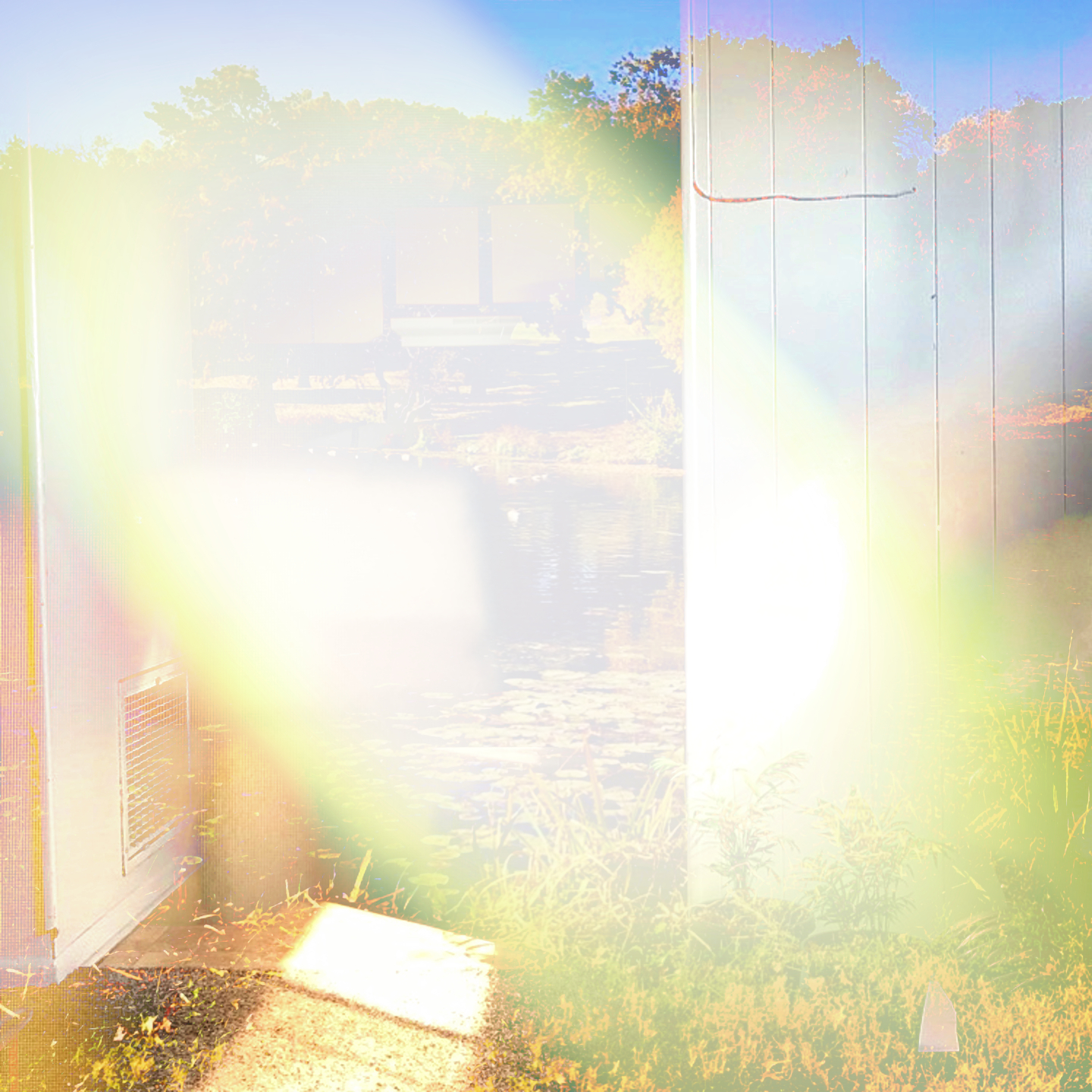
Cover artwork for the EP was designed by Dylan Beck.
RT: I found that My Two Feet Beneath Me was a significant step forward for you: the guitars are more massive; the drums are more crisp and live; and the vocals are more pronounced. Sonically, what can listeners expect in the latest installment?
DB: I like to think that Your Voice Within Me combines the best of old- and new-school [A Real Echoey Approach] — the crunchy distortion of the One of These Days series, the melodic sensibilities of Lives Are Short; Lives Are Long, the earworm bass guitar lines of Alive for the First Time; Alive for the Last Time, and the meticulous production of My Two Feet Beneath Me — with some new techniques and textures. I’ve been really obsessed with “found sound” — the serendipitous field recordings I’ve obtained — some of which is featured in the trailer for the EP. It’ll also mark the first time I’ve had a guest performer on an [A Real Echoey Approach] tune. I’m very excited to share.
RT: Oh, that’s right: you released a record of nature recordings back in May. On your announcement for that, you alluded to the existence of more music in that vein. Do you have a timeline for when — if ever — you might release that?
DB: I do plan on releasing it — that’s the good news — but I’m not sure when. Currently, I have four songs that are finished with a fifth that is nearly finished and a sixth that is underway but has not entirely taken shape. I’d like two to four more tracks for the project, but I haven’t had the time. Even more, my catalog of found sound has really ballooned to the point where it will take some thoughtful consideration to put an album together. But it’s totally something I enjoy and will continue to do as life allows.
RT: Do you have any plans for a proper full-length shoegaze record?
DB: Possibly. Probably. I like the concise format of an EP, but as the project becomes more serious, it grows more difficult to write three-minute songs and more attractive to write ecstatic bridges and gorgeous codas and poignant lyrics — like the greats.
Until the Day I Am Lifted to the Sky, I Will Feel Your Voice Echo Within Me, and I Will Know I Am Not Alone is set for release on Friday, 13 August 2021, as a name-your-price download at arealechoeyapproach.bandcamp.com and streaming on Spotify, Apple Music, Tidal, and more. Until then, listen to A Real Echoey Approach: the Complete Spotify Shoegaze Catalog on Spotify and download all releases for free on BandCamp.
 Rex Talyetiwhoop